
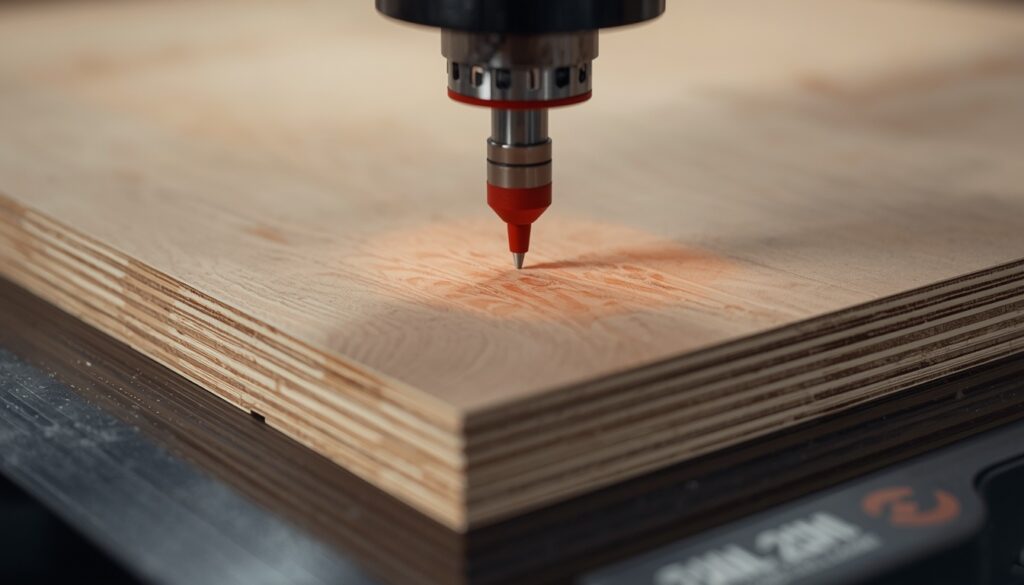
To successfully evaluate plywood suppliers in new international markets, global B2B buyers must carefully audit factory capabilities, verify raw material quality, and inspect glue bonding standards to prevent costly defects and container rejections.
Sourcing commercial plywood from overseas manufacturing hubs offers significant cost advantages, but it also exposes supply chains to hidden operational hazards. Working with unverified mills often results in core delamination, thickness variations, surface warping, and shipment delays.
This professional B2B guide outlines a structured framework to evaluate plywood suppliers efficiently and protect your enterprise from costly import mistakes.
Table of Contents
1. Common Risks When You Evaluate Plywood Suppliers
Many overseas factories showcase polished digital portfolios or trade show displays, but actual bulk production standards can fluctuate. International procurement teams frequently encounter three critical operational challenges:
⚠️ The “Perfect Sample” Trap
Receiving premium-grade physical samples by express courier, only to receive inconsistent quality upon bulk container delivery.
⚠️ Inconsistent Raw Material Sourcing
Mills purchasing low-cost rotary-cut veneers from unverified local traders, leading to unpredictable panel density and strength.
⚠️ Regulatory Non-Compliance
Misinterpretation of formaldehyde emission frameworks (such as CARB P2 vs E1/E2), leading to immediate port detention by customs.
2. How to Evaluate Plywood Suppliers in 5 Steps
Audit Factory Machinery & Production Infrastructure
When you evaluate plywood suppliers, a dependable export manufacturer must operate advanced machinery to guarantee structural uniformity and precise dimensional tolerances. Request a virtual factory walkthrough to inspect:
- Automatic Veneer Core Composers: Machines that edge-glue inner veneers tightly to eliminate internal core gaps and structural voids.
- Double-Side Calibrating Sanders: Precision finishing lines ensuring uniform panel thickness across the entire sheet (±0.3mm tolerance).
- Automated Hot-Pressing Systems: Computer-controlled temperature and hydraulic pressure regulation for permanent adhesive bonding.
Verify Timber Species & Core Construction
Panel durability and screw-holding capacity depend directly on timber selection. Understanding core species performance—such as plantation-grown Eucalyptus, Acacia, or mixed hardwood—ensures the panels suit your climate and structural application.
Test Glue Bonding & Monitor Moisture Content
A crucial milestone when you evaluate plywood suppliers is conducting rigorous laboratory sample testing before issuing formal purchase orders. Verify these parameters:
- Boiling Water Test (BWT): Boil core sample blocks for 4 to 72 hours to ensure adhesive layers withstand delamination under extreme moisture.
- Moisture Content Verification: Ensure core veneers are kiln-dried strictly below 10% to prevent fungal mold growth and transit warping.
- Formaldehyde Emission Documentation: Review accredited third-party test reports verifying compliance with target market regulations.
Analyze Incoterms, Lead Times & Packaging
Reliable manufacturing partners provide transparent logistics planning, including standard container capacity calculations (~38 CBM per 40HQ), stable production lead times (15–30 days), and clear commercial terms (FOB Cat Lai Port or EXW).
Conduct Independent Pre-Shipment Inspections (PSI)
Before releasing final payment balances, mandate an independent third-party quality inspection (such as SGS or Intertek) to verify bundle strapping, edge sealing, and container loading security.

3. Warning Signs and Red Flags When You Evaluate Plywood Suppliers
| Evaluation Metric | Reliable Export Partner | High-Risk Supplier (Red Flag) |
|---|---|---|
| Pricing Structure | Safe Transparent pricing aligned with raw material timber costs. | Red Flag Suspiciously cheap quotes (>15% below market average). |
| Certifications | Safe Verifiable CARB P2, FSC, or CE compliance documentation. | Red Flag Outdated, unverified, or falsified test certificates. |
| Batch Quality Logs | Safe Maintains daily internal testing logs and production data. | Red Flag Refuses third-party factory audits or QC reporting. |
| Contract Clarity | Safe Explicit specifications on thickness tolerance and core grade. | Red Flag Vague terms such as “standard commercial quality”. |
Taking a systematic approach when you evaluate plywood suppliers safeguards your supply chain against operational disruption, financial loss, and reputational damage in your target markets.